Scuba Review 
Has it been a while since you’ve been scuba diving? Do you feel like your scuba skills and knowledge are a bit rusty? The Scuba Review Tune-up is just the refresher you need. It reacquaints you with diving so that you're back to feeling comfortable in the underwater world in less than a day. 
 
The Fun Part 
Brush up on your scuba knowledge and skills. Improve your diving ability, and get your scuba gear ready for your next diving holiday. 
 
What You Learn 
You go over scuba knowledge you learned during your initial training. Then, practice fundamental skills in a pool or a confined water area. You review: 
 
Safe diving practices 
Dive planning fundamentals 
Problem management 
Breathing air at depth 
Recreational diving and dive tables: basic knowledge 
Recreational diving and dive tables: dive planning 
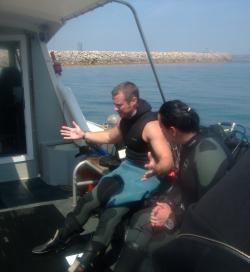


After you complete the knowledge assessment, you go through the Confined Water Skills Preview. You review information about each skill, why it’s important, points to remember when performing the skill and a short video clip. Completing this section just before practicing is a great way to refresh your knowledge of how each skill is performed. 
 
 
Prerequisites:  
To take Scuba Review, you must:  
have a scuba diver certification or be enrolled in a scuba certification course  
Be at least 10 years old 
 
The Scuba Review course is particularly beneficial if you:  
Are a PADI Open Water Diver course referral student who wants a refresher prior to making your open water training dives  
Are a PADI Scuba Diver who wants to upgrade to Open Water Diver  
Just haven’t scuba dived in a while and want to get acclimated again  
 
The Scuba Gear You Use  
You use all the basic scuba gear. 
 
The Learning Materials You Need 
Quickly and effectively review scuba diving fundamentals with PADI’s Scuba Tune-Up Guidebook. Begin by answering a few questions related to dive safety, problem management and dive planning. For example: 
What are the five steps in a pre-dive safety check? 
What is the maximum depth limit for all recreational diving? 
What are the signs and symptoms of decompression sickness? 
At 12 meters a diver runs out of air. Her buddy is more than 20 meters away, what should she do? 
 
Correct answers will allow you to complete the book quickly. For incorrect answers, you’ll read a brief explanation to help you understand the concept. 
Adventure Diver 
The PADI Adventure Diver course helps you get more out of diving by introducing you to new types of scuba diving adventures. It’s a great opportunity to work with your instructor to build your scuba diving skills and gain more confidence. 
 
The Fun Part 
Have you always wanted to try underwater photography? How about wreck diving? Here's your chance! You can sample three dives of your choice, get a taste of what you like, and feel more at ease in the water, strengthening your underwater skills and letting you enjoy scuba diving more than ever. 
 
Get credit! Each Adventure Dive may be credited toward the first dive of the corresponding PADI Specialty course. This means you can be well on your way to becoming a Master Scuba Diver. 
 
What You Learn 
You can choose what you’re most interested in learning. Need to work on your buoyancy skills? Try the Peak Performance Buoyancy Adventure Dive. Want to know what you’re looking at down there? Try the AWARE-Fish Identification Adventure Dive. Choose any three of the following:  


Adventure Dives available to scuba divers 10 years and over:  
AWARE-Fish Identification  
Boat Diver  
Dry Suit Diver (Own dry suit required) 
Peak Performance Buoyancy  
Underwater Naturalist  
Underwater Navigator  
Underwater Photography (own camera required) 
 
Additional Adventure Dives available to scuba divers 12 years and over:  
Deep Diver  
Drift Diver  
Multilevel Diver  
Night Diver  
Search and Recovery Diver  
Underwater Videography (own camera required)  
Wreck Diver  
 
The Scuba Gear You Use  
You use all your basic scuba gear and depending on which three adventure dives you pick, you may also try out underwater photography equipment, a dive light , a dry suit, lift bags, a surface marker buoy, a compass or other specialty gear.  
 
The Learning Materials You Need  
PADI’s Adventures in Diving Manual and DVD provide information on more than 14 types of specialty diving. You’ll use them as a guidebook to improve your diving skills and prepare for new experiences and adventures.  
 
Prerequisites: 
To take the Adventure Diver course, you must be:  
 
A PADI Open Water Diver or Junior Open Water Diver certification (or qualifying certification from another organization)  
Minimum age: 15 years old (10 years for PADI Junior Adventure Diver)  
 
Your Next Adventure  
After your PADI Adventure Diver certification you can take the next step by completing two more adventure dives. If you've completed five total adventure dives that include deep and navigation, you're a PADI Advanced Open Water Diver!  
Advanced Open Water Diver 
Exploration, Excitement, Experiences.  
They’re what the PADI Advanced Open Water Diver course is all about. And no, you don’t have to be “advanced” to take it – it’s designed so you can go straight into it after the PADI Open Water Diver course. This course helps you increase your confidence and build your scuba skills so you can become more comfortable in the water. This is a great way to get more dives under your belt while continuing to learn under the supervision of your PADI instructor. It builds on what you’ve learned and develops new capabilities by introducing you to new activities and new ways to have fun scuba diving. 
 
You’ll hone your skills by completing five adventure dives that introduce you to: 
Underwater navigation  
Deeper water diving (typically anywhere from 18-30 metres) 
Plus a sampler of three more Adventure Dives of your choice 
Dives available to scuba divers 10 years of age and older include: 
AWARE-Fish Identification  
Boat Diver  
Dry Suit Diver (your own dry suit is required) 
Peak Performance Buoyancy  
Underwater Naturalist  
Underwater Photography (own camera required) 
Dives available to scuba divers 12 years of age and older: 
Drift Diver  
Multilevel Diver  
Night Diver  
Search and Recovery Diver  
Underwater Videography (own camera required) 
Wreck Diver  


The Fun Part: Your Choice  
One reason you’ll love the Advanced Open Water Diver course is that you and your instructor choose from 12 types of Adventure Dives to complete your course. You can try your hand at digital underwater photography, wreck diving, night diving, peak performance buoyancy and much more.  
 
Get credit! Each Adventure Dive in the PADI Advanced Open Water Diver course may credit toward the first dive of the corresponding PADI Specialty Diver course.  
 
Prerequisites:  
To take this course: 
You must be a PADI Open Water Diver (or qualifying certification from another training organization)  
15 years old (12 for Junior Advanced Open Water Diver)  
 
What You Learn  
The knowledge and skills you get in the Advanced Open Water Diver course vary with your interest and the adventures you have, but include 
Practical aspects of deep diving 
Physiological effects of deeper scuba diving. 
More ways to use your underwater compass 
How to navigate using kick-cycles, visual landmarks and time 
How to better use your dive computer and electronic Recreational Dive Planner (eRDPml) 
And much, much more, depending on the Adventure Dives you choose 
 
The Scuba Gear You Use 
You use all the basic scuba gear including your underwater compass. Depending on which three adventure dives you pick, you may also try out underwater photography equipment , a dive light, a dry suit, lift bags, surface marker buoys and various types of boats.  
 
The Learning Materials You Need 
PADI’s Adventures in Diving Manual and DVD provide information on more than 14 types of specialty diving. You’ll use them as a guidebook to improve your diving skills and prepare for new experiences and adventures. 
 
Your Next Adventure 
After you’ve tried a specialty in the Advanced Open Water Diver course, you’ll probably want to take the whole Specialty course and learn more about it. 
Rescue Diver 
“Challenging” and “rewarding” best describe this course.  
Building upon what you’ve already learned, this course expands on what you already know about how to prevent problems, and how to manage them if they occur. 
 
The Fun Part 
The fun part about this course is rising to challenges and mastering them. Most divers find this course both demanding and rewarding, and at the end, say it’s the best course they’ve ever taken.  
 
What You Learn 
Self rescue 
Recognizing and managing stress in other divers 
Emergency management and equipment 
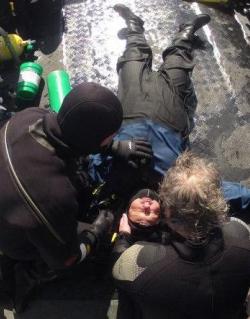
Rescuing panicked divers 
Rescuing unresponsive divers 
 
You’ll learn how to think like a rescue diver and preview skills you’ll practice with your PADI Instructor. Once your Rescue Diver course is complete, you can review the DVD to refresh your dive safety skills as needed. This tool box of knowledge and techniques will give you the expertise to handle almost any emergency situation. 


The Scuba Gear You Use  
You use all your basic scuba gear including a dive computer and accessories.  
 
The Learning Materials You Need  
The PADI Rescue Diver crewpak includes all materials required to complete the PADI Rescue Diver course – including a pocket mask.  
 
Prerequisites:  
To enroll in the PADI Rescue Diver course, you must:  
Be 15 years or older  
Have a PADI Advanced Open Water Diver certification (or have a qualifying certification from another organization) 
Be trained and current for first aid and CPR within the previous two years (Ask us about Emergency First Response CPR and first aid courses). 
 
Your Next Adventure  
After completing CPR and first aid and the PADI Rescue Diver course, you should take the PADI Emergency Oxygen Provider course. Together, these three courses round out your ability to handle scuba diver emergencies.  
Master Scuba Diver  
Sharpen Your Skills with the PADI Master Scuba Diver. 
You have the passion. You want to join the best of the best in recreational scuba diving. You want to live the dive lifestyle and explore the underwater world and go places and see things you have never experienced.  
More than a pipe dream?  
 
Absolutely! Do it by becoming a PADI Master Scuba Diver – a qualification that puts you in the class of distinction – writing you a ticket to endless adventure and opportunities, through the experience and scuba training that sets you apart.  


The Fun Part  
With the PADI Master Scuba Diver qualification, you have reached the highest non professional level in the PADI System of diver education. It means that you have acquired significant training and experience in a variety of dive environments. See all the specialty diver courses offered.  
 
Prerequisites  
PADI Advanced Open Water Diver  
12 years old  
Minimum of five PADI Specialty Diver courses  
Minimum of 50 logged dives  
 
Depending on where you live, you may be eligible for special incentives when you take the PADI Master Scuba Diver Challenge today. 


Emergency First Response  
CPR and First Aid: Emergency First Response Primary and Secondary Care  
First aid and CPR are good skills for anyone involved in adventure sports – just in case. You also need these skills for the PADI Rescue Diver course.  
Emergency First Response is a PADI affiliate that specializes in teaching these lifesaving skills – and they’re for anyone, not just divers. Most PADI Instructors are also Emergency First Response Instructors!  
 
The Fun Part  
The fun part about Emergency First Response training is learning serious medical emergency response skills in an upbeat, positive environment. You gain the confidence that you are prepared to help in an emergency. 


What You Learn in the EFR Primary and Secondary Care Courses  
 
BLS (Basic Life Support) CPR and rescue breathing at the basic level  
AED (automated external defibrillator) use (optional)  
Preventing and caring for shock 
Spinal injury management Use of barriers to reduce disease transmission  
Basic first aid and first aid kit considerations 
 
 
The Learning Materials You Need  
Through a combination of independent study and skill practice with an instructor, you’ll build the confidence and skills to provide basic emergency care.  
 
The Primary and Secondary Care Manual and DVD preview emergency scenarios and provide step-by-step skill demonstrations.  


The 'Emergency First Response Care at a Glance' card is a quick-reference guide for emergency situations. Designed to fit in a glove compartment or backpack, the 'Care at a Glance' card is an important component for any first-aid or disaster preparation kit. 
 
Prerequisites 
To enroll in Emergency First Response courses, you must 
Care about other people and want to be able to assist them in a medical emergency. 
 
Your Next Adventure 
Beside the Primary and Secondary Care Courses, Emergency First Response offers Care for Children and other emergency training programs.